


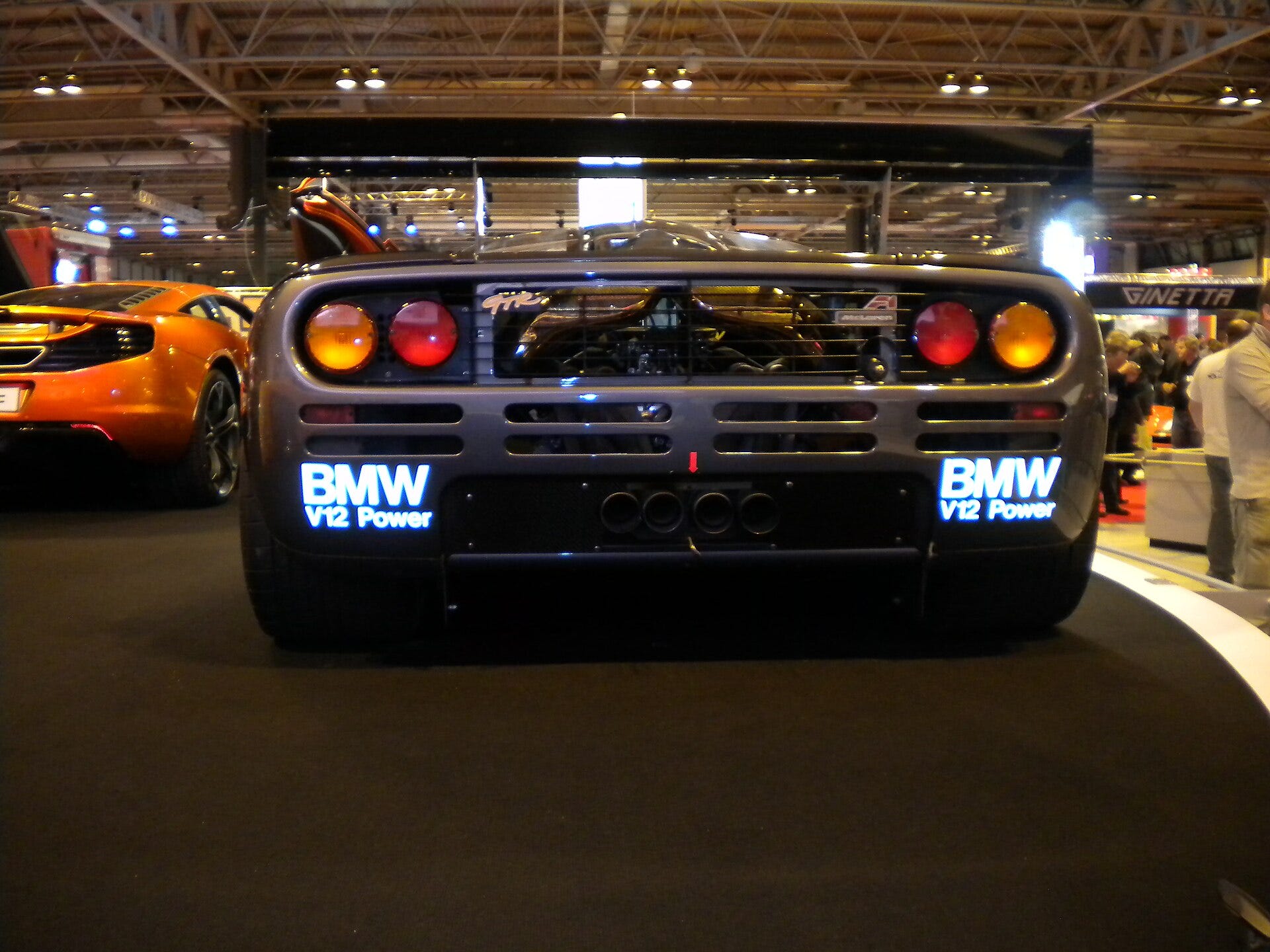
In 1992 McLaren Unveiled the McLaren F1, a car that quickly became heralded as the ultimate road car. It was a greatest hits of everything a car could be. Conceived by Gordon Murray, who had just finished up dominating formula one with his 1988 MP4/4, it was powered by a bespoke BMW Motorsports V12 that could deliver over 600hp at its 7,500rpm redline. It utilized a carbon fibre monocoque, technology that had only been introduced into formula one a decade earlier. It would go on to hit a top recorded speed of 243 mph, a speed that it would take Bugatti over a decade to topple. It was sensational as a road car, but the question on everyone’s mind was how would it fair as a race car?
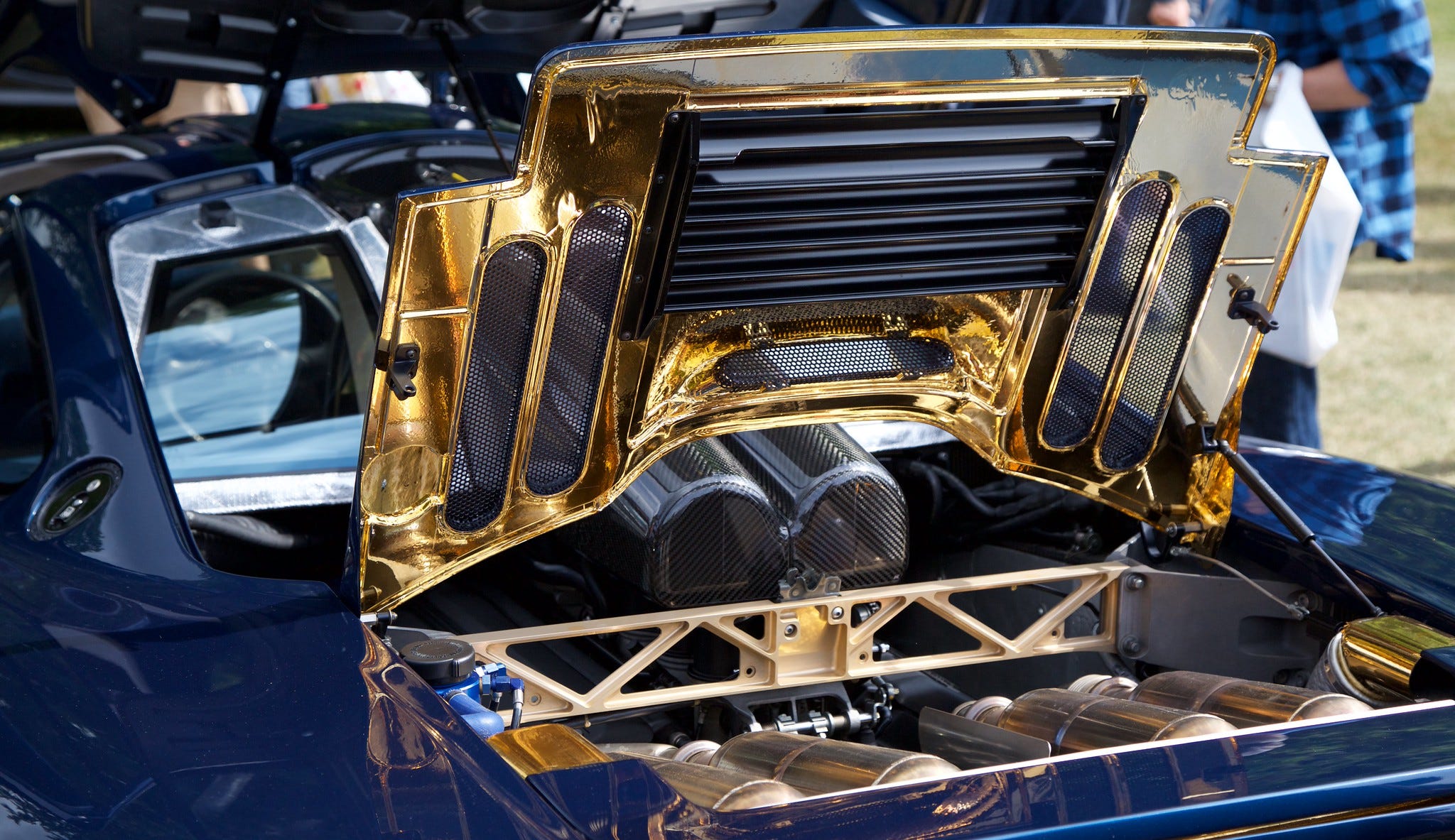
The F1 used race car technology, but only in the context to build the best road car that could be, it still had air conditioning, a 6 CD changer and was designed to be as useable as a Honda NSX on the street, provided you had a big enough wallet that parking £550,000 (in 1993 money) outside a Tesco’s didn’t fill you with a sense of constant dread.
Gordon Murray was quite adamant of this fact, to which he didn’t want the F1 to be influenced by any racing regulation whatsoever. He was given a once in a lifetime opportunity to build an money no object show of what a road car could be, and as such did not entertain the idea of the F1 being used in any form of motorsports. In his eyes, it would compromise the vision of what he set out to do. Even after development of the road car finished Murray had little interest in developing a racing version of the car, despite the clear potential in the chassis.
Photograph by Martin Lee
However 1994 saw the founding of the BPR GT global series, a racing series based around road going production chassis. With the demise of the world sports car championship, it was widely adopted and many established teams enquired about taking the McLaren F1 straight to GT1 class racing and eventually Murray was convinced to allow McLaren to start preparing Chassis to run in the 1995 season.
An unlabelled chassis that was destined to become car 019 was taken from production and was dubbed 01R, and was then to become the prototype for the McLaren GTR project. The cars first step was to go on a diet, with all of the creature comforts that made the F1 so usable being removed in the interest of saving weight. the car was then given carbon ceramic brakes as well as new cooling ducts to keep them from overheating over the long endurance races, using up space that was taken for the side storage bins previously.
Photograph by Stephen Hynds
A fixed large rear wing, simple side skirts and a slightly redesigned front bumper with more cooling rounded out the performance upgrades that were deemed necessary for the GTR to compete. It still had its standard gearbox and standard engine (with removed catalytic converters and mufflers). The only further changes were for regulation, with a roll cage and an airflow restrictor reigning the engine in to 592hp (600PS as the regulations required). The prototype completed 24 hours of testing at Magny-Cours, before McLaren handed the torch over to privateer teams.
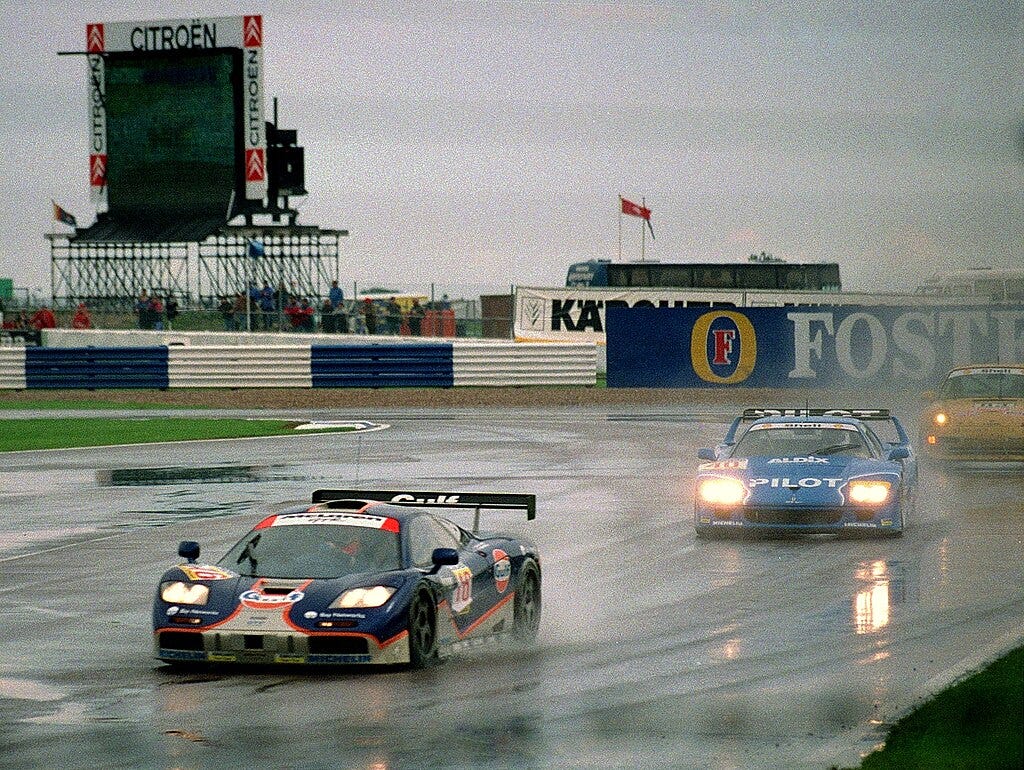
The McLaren F1 GTR immediately became a dominant force in the GT world series, winning 1-2-3 at the season opener. F1 GTRs would continue to score podiums all the way through to may, with two 1-2-3-4-5 finishes in the early season before summer. Various updates the the GTR was made during this time, most notably a dry sump gearbox fitted to try and help keep the clutches alive if the F1 was to be entered into a longer race.
Photograph by Martin Lee
BPR GT took a break during the month of June, where all eyes were on the 24 hours of Le Mans. McLaren saw the potential of racing the car at lemans, as another facet of racing they could go into and as a place to cement the legacy of the McLaren F1 not only as a performance car, but one that could endure a gruelling 2,500 miles at full tilt.
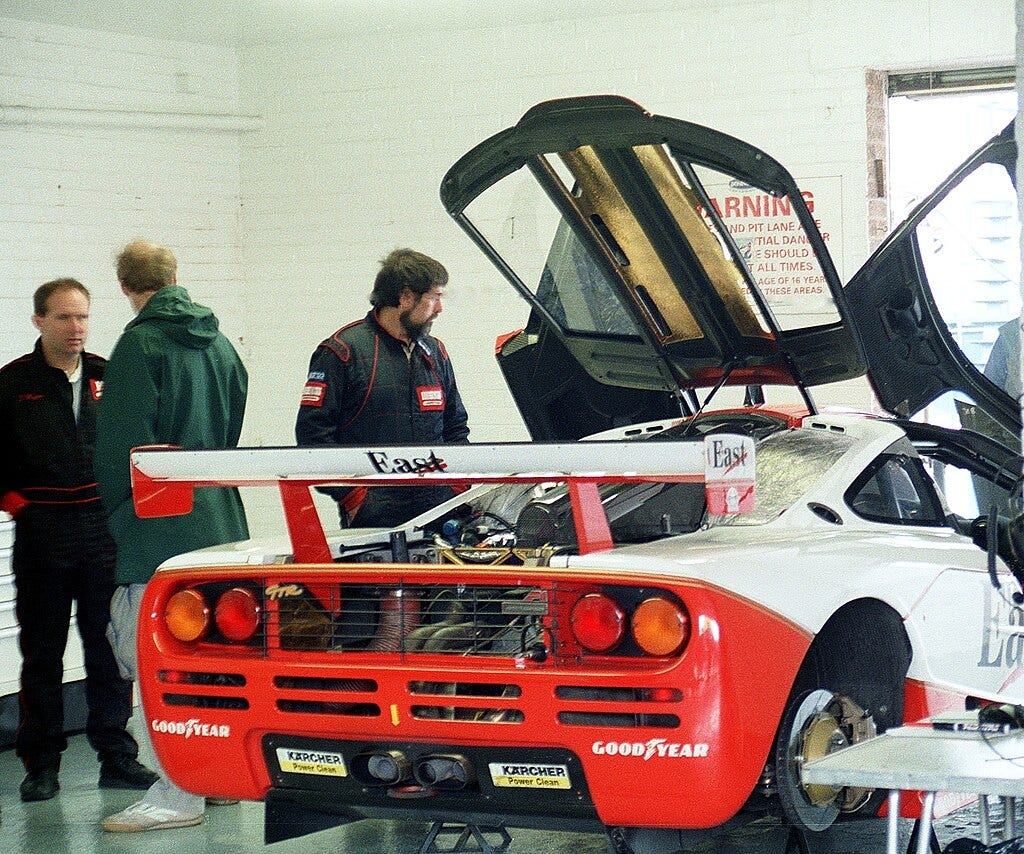
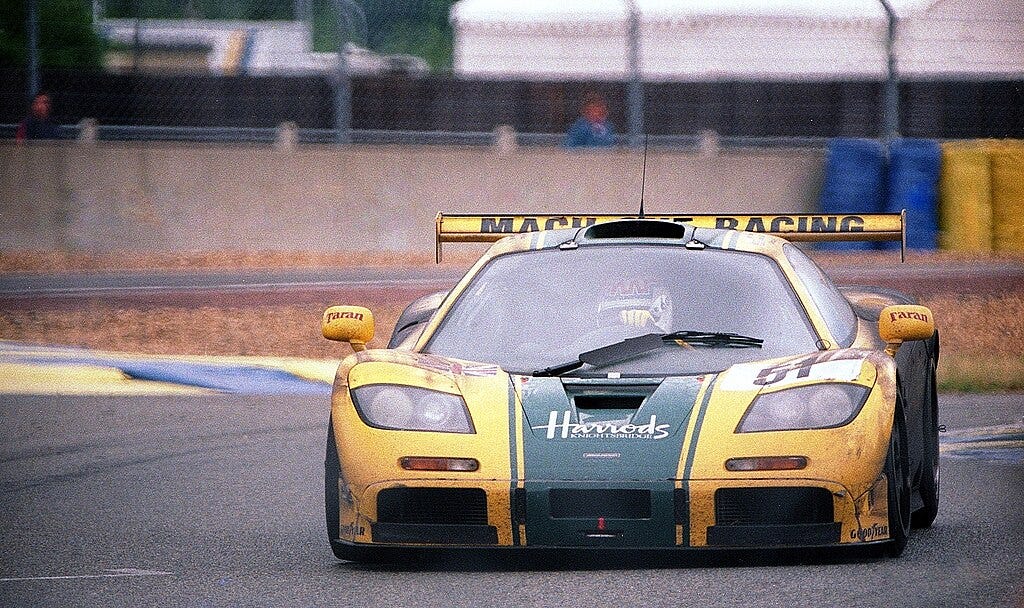
Of the teams racing in Le mans, 4 were already racing F1s in BPR, with one new comer. David Price Racing, with a second team dubbed DPR west, BBA Competition and Gulf Racing had all been competing previously with the F1 GTR, Kokusai Kaihatsu Racing was a new team financially backed by a Japanese slot machine manufacture (Kokusai Kaihatsu), and was run by Lanzante, a British company who prepared historic cars and had recently moved into the world of motor racing. They were having limited success in the 1995 BPR season with their GT3 class 911 turbo, and had ordered a McLaren F1 GTR to race in BPR and the 24 hours of Le Mans.
Photograph by Martin Lee
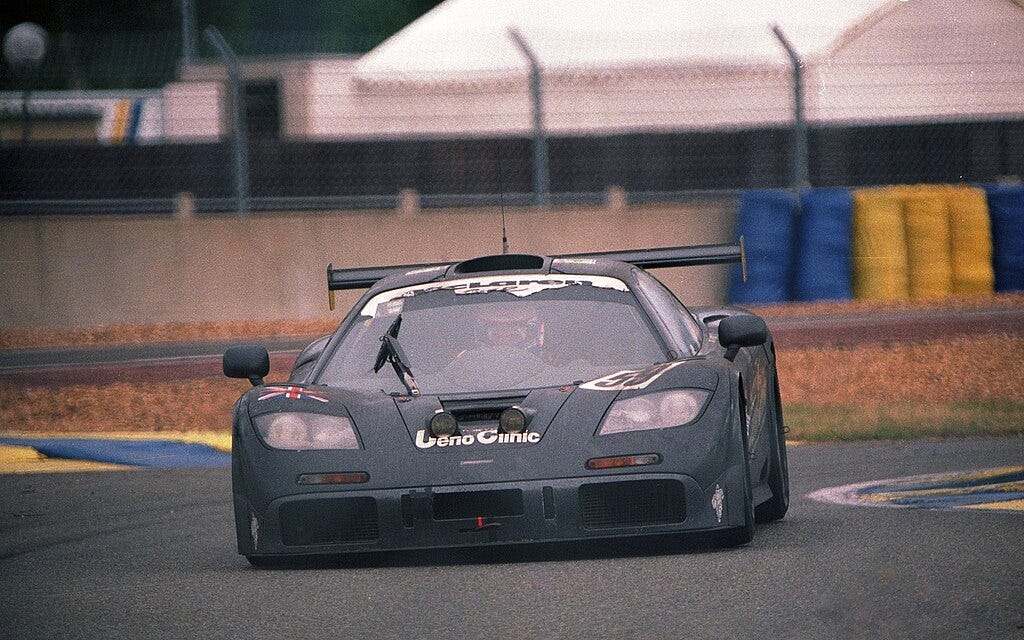
McLaren had 7 customer cars built at this point, however a bad wreck in Spain meant that chassis 08R had to sub in for 03R at gulf racing, meaning that Kokusai Kaihatsu did not have a car to run. It was then decided that 01R, the tired development car used for the GTR project, which was never itself meant to compete, would be loaned to them for the 24 hours of Le Mans. Despite conjecture from other teams, McLaren promised that the 01R car would have no more factory support than the other customer cars.
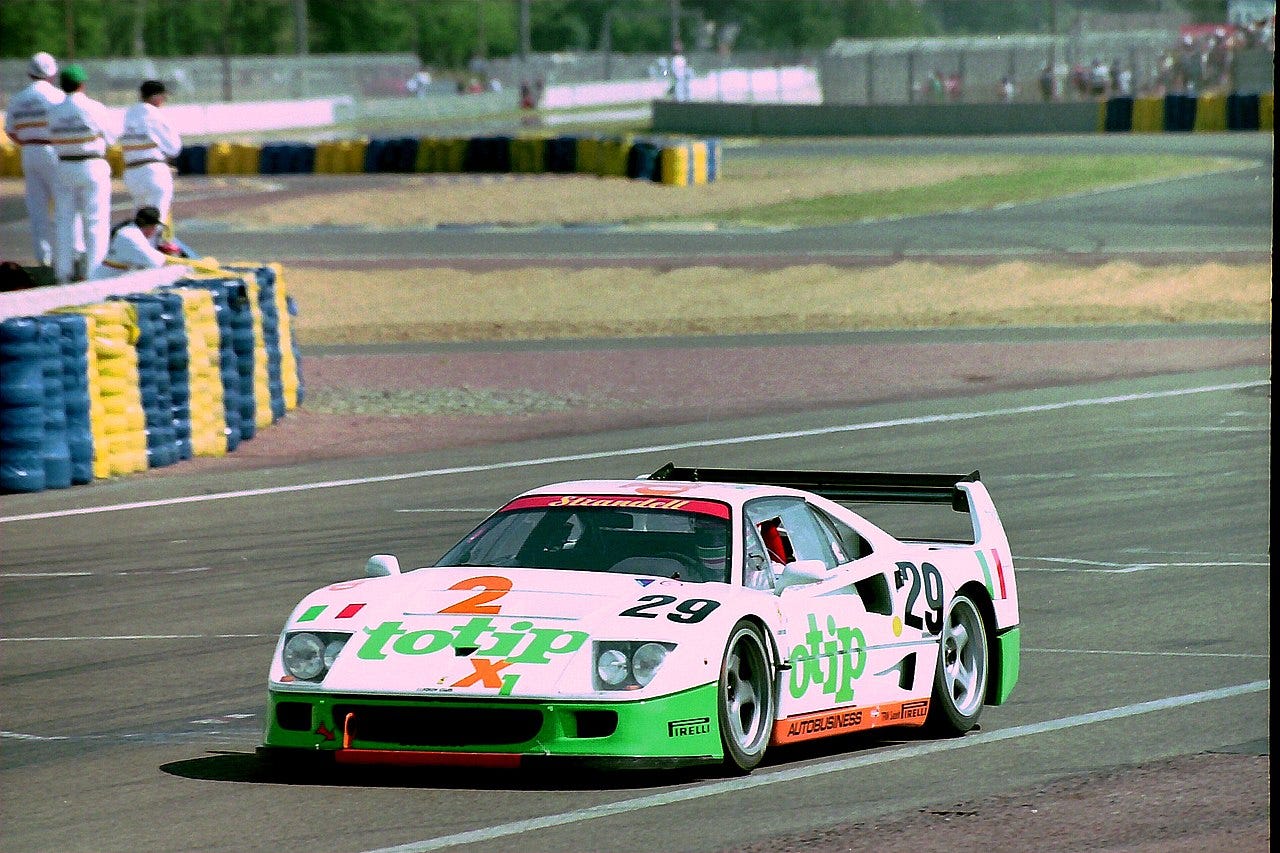
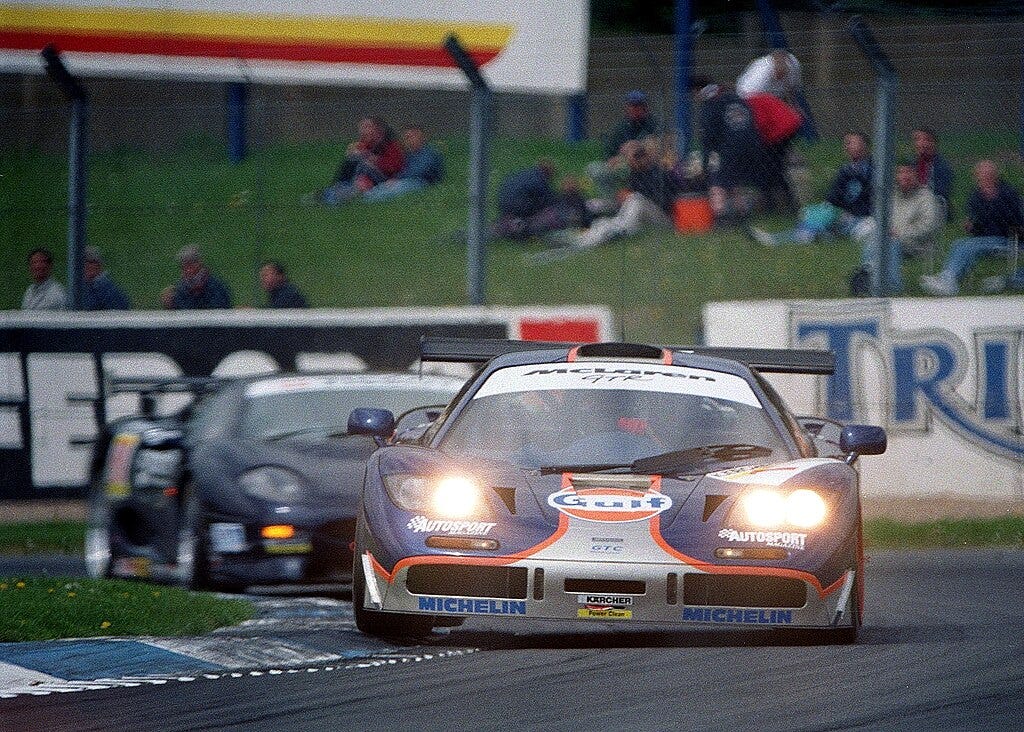
The grid at Le Mans saw the McLarens be represented in GT1 class, which was poised to be significantly slower than the WSC open top prototypes, and McLaren were only aiming to be first in class, with main competition being the Ferrari F40 LMs, which proved to be a tough opponent in qualifying.
Photograph by Martin Lee
As the race began it became clear that on a good day the WSC cars were the class to win, while the GT1 F1s could just about get along side on a straight the lightweight high downforce prototypes would trounce them in the corners. Despite that the spirits in McLaren garages were high, the cars were running well and looked to be a class winner, with the David Price Racing cars looking like the favourites. It wasn’t all without issues, as the delicate road car gearbox started to spell trouble for the BBA Competition car, which had to pull in after just 7 laps.
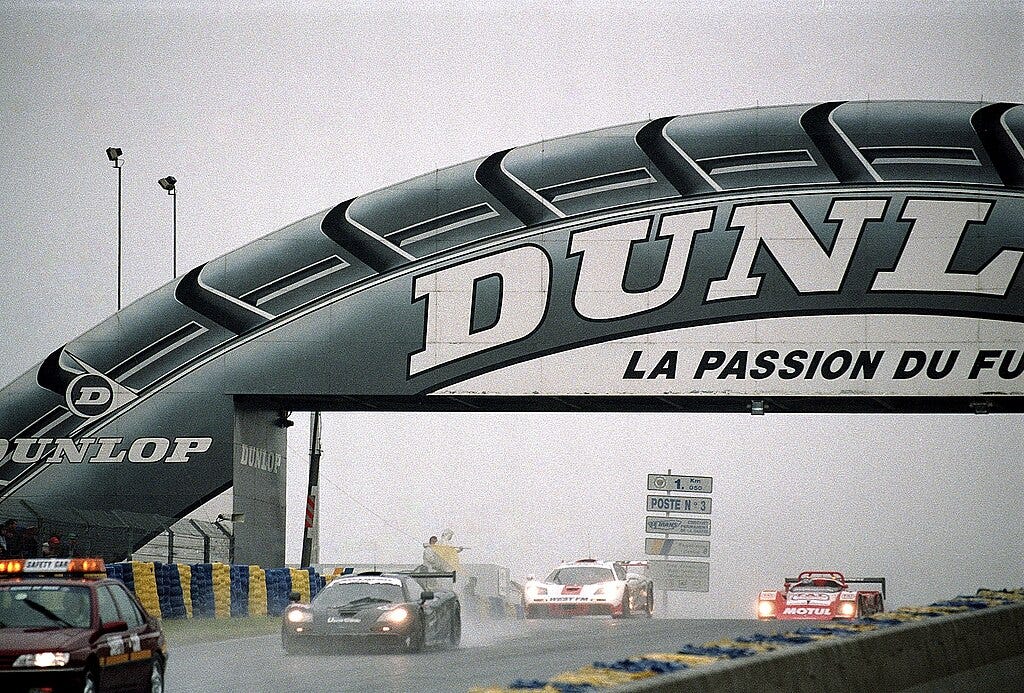
Within the hour rain had started to pour down on the track and wrecked havoc on the racing. The Ultralight WSC cars didn’t have enough weight to keep the rear end of the cars in check, meanwhile the laggy F40 turbos proved very tricky to keep control of on corner exits. Many also got caught out being on slicks when the rain got properly wet and cars started to drop out of contention all together. At 8pm Mario Andretti, Piloting the only WSC still ahead of the McLarens, spun into the wall. The 30 minute time loss was enough to put 3 McLarens ahead, the DPR West team leading the way.
Photograph by Martin Lee
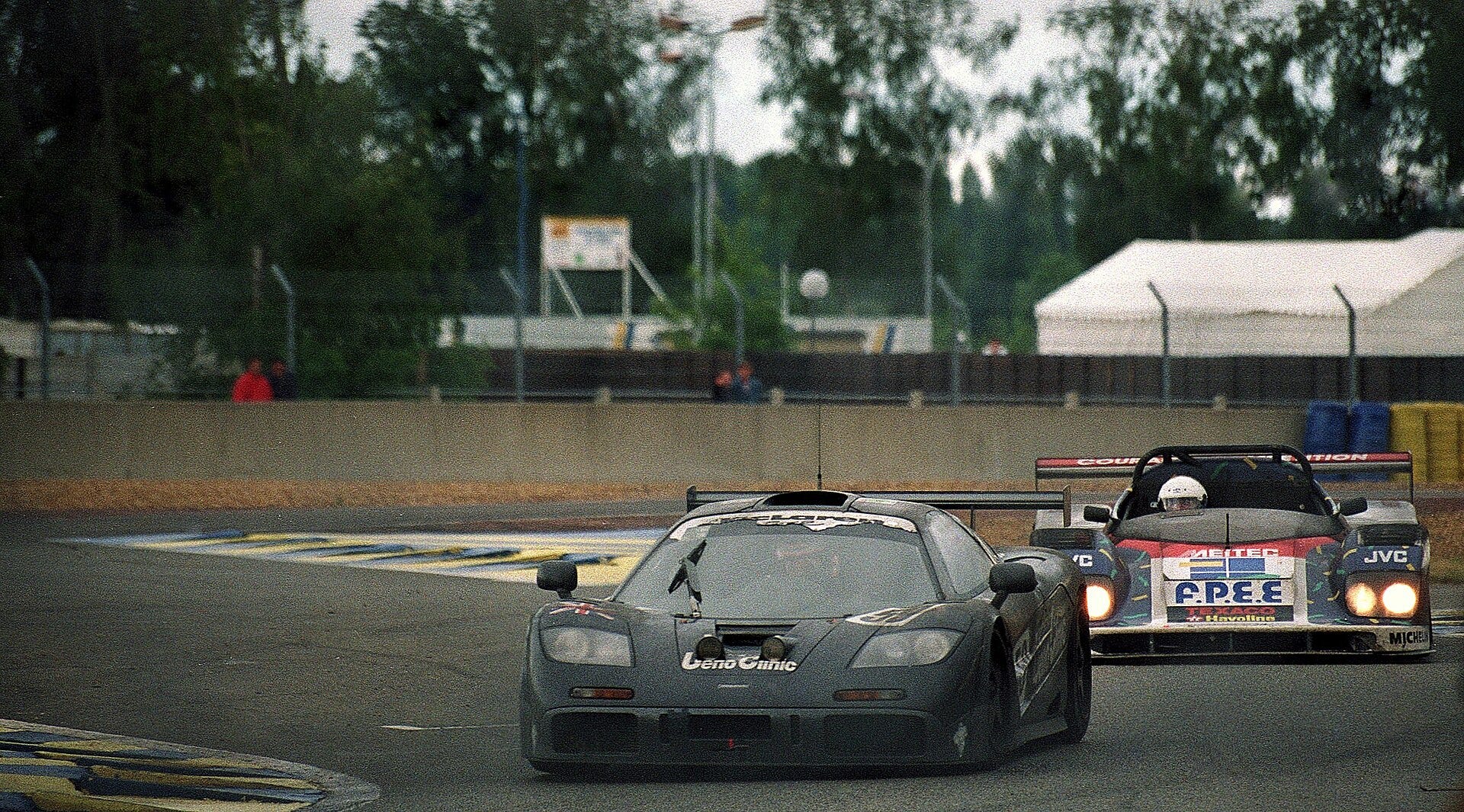
As they went into the night the Ueno car started to gain significant time on the leading DPR cars ahead, with JJ Lehto driving the car through the pouring conditions. His driving put a huge dent in the gap but the DPR F1s were still the favourites to win. By this point in the night, the GTRs had been going longer than they ever had in previous races, and there was no knowledge of how the cars would hold up at full racing speed going into the second half of the race. The first major mechanical issue struck the DPR West car, at around 4am the clutch failed. It was turned around within 70 minutes but while the car was still warming up John Nielsen out braked himself and took the team out of the race.
Photograph by Martin Lee
The remaining DPR car lead the charge as dawn broke over the track, however the win was no longer as clear cut, with Ueno’s F1 catching, JJ Lehto still pushing the car faster through the event. Eventually the DPR car spun out, pitting both cars within contention of the title, with pitstops become crucial to the race outcome. Meanwhile the Courage Porsche of Mario Andretti had start to close in and make up time on both McLarens, threatening to beat both of them to the line. A botched Pitstop by KK Racing wasted 4 minutes and sent the car back out on the wrong tyres, seeming to hand the over the victory to DPR.
However at 2pm clutch problems befall the second DPR car, and despite some ingenuity to get it fired up on the starter, the car falls well out of contention for the win. The Ueno F1 took the lead, and after continuing to push on to keep out of the Jaws of the Courage Porsche, finished the race in first place.
Photograph by Martin Lee
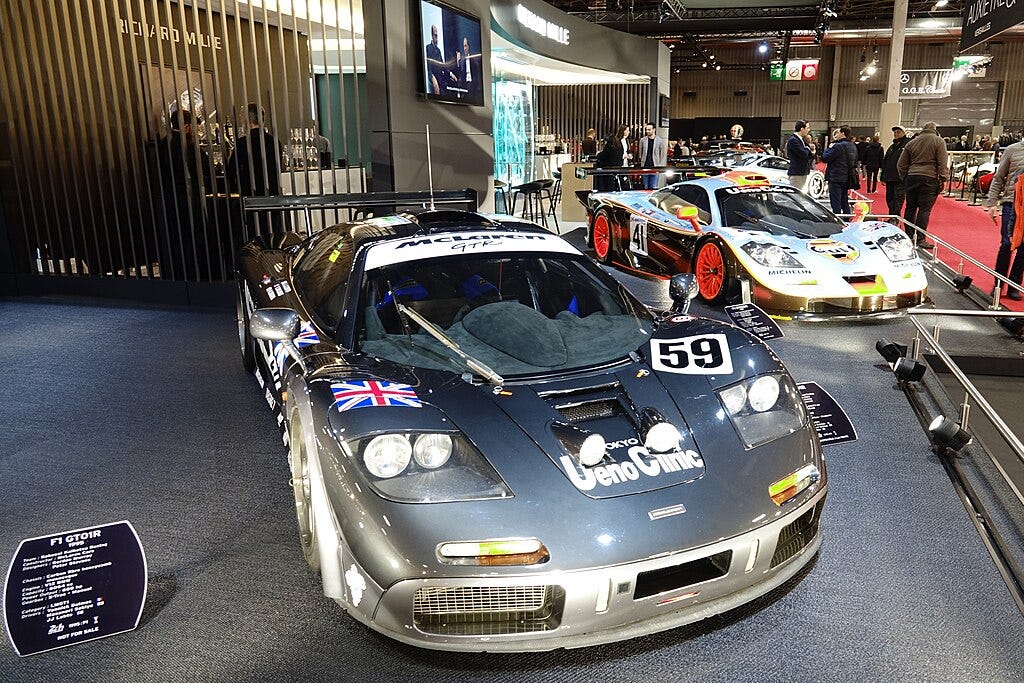
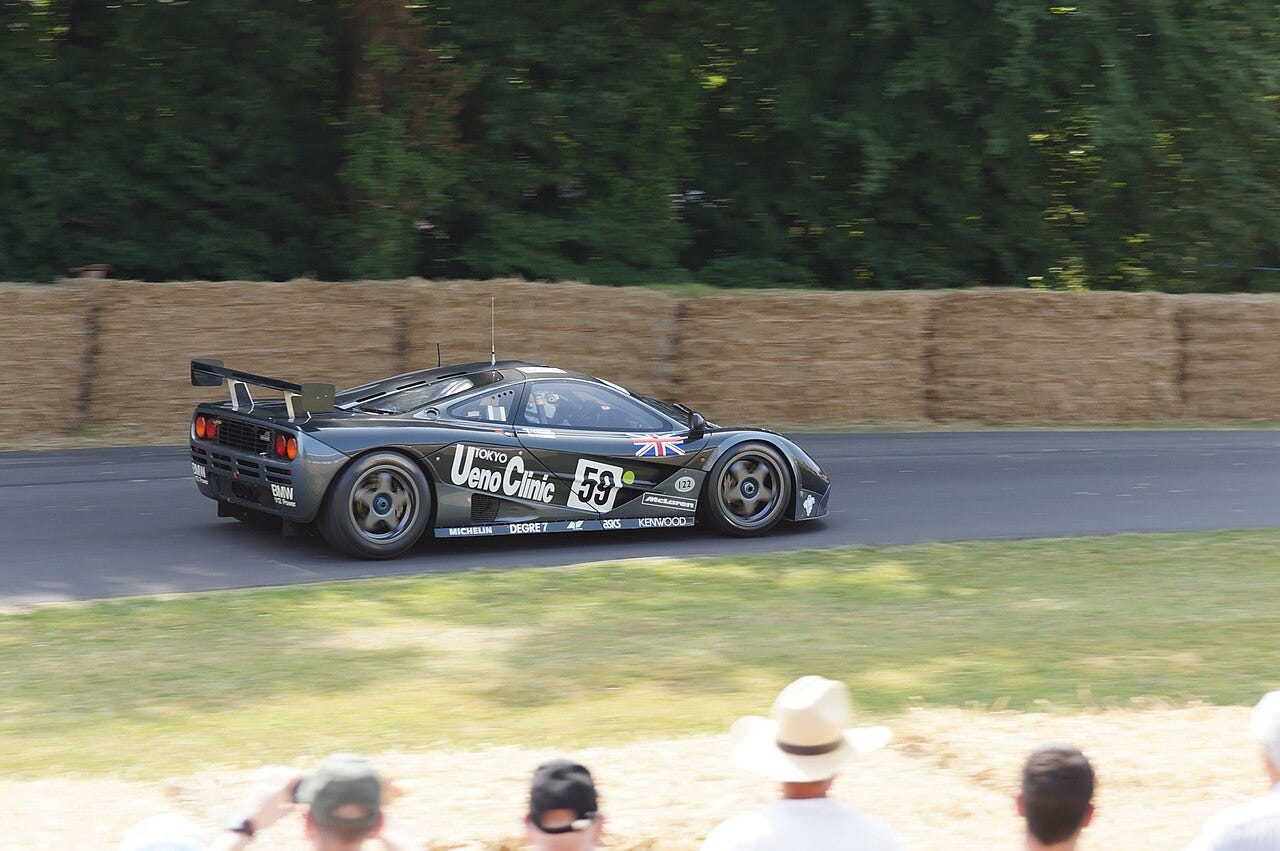
Out of all of the cars to win Le Mans, the McLaren’s 01R, being hastily brought together with a team that had no prior experience racing the F1 sits as one of the greatest underdog stories of all time. It was the last road developed car to win Le Mans outright.
Photograph by Yannick Leclercq
The prototype, never intended to race at all was brought back to McLaren’s technology centre where it has resided ever since, meanwhile Motokazu Sayama (who runs the Ueno Clinic) was sold a road going F1 painted in matching black metallic and grey. McLaren Built 5 F1 LMs to commemorate the 5 finishing cars, and returned the next 2 years with the F1 to Le Mans. They were never able to replicate the same success however, as Porsche had developed the 911 GT1, a car seemingly designed to spite the F1s GT1 dominance, and set the new pace for the GT1 class of car.
Oh and what does the Ueno Clinic do you may ask? They specialize in STD treatment and Cosmetic surgery of…. man bits.
Photograph by youkeys
Thanks for reading.